
How Shifting Weather Fronts Guide Jockey Tactics and Shape Double Bet Results Across Flat Racing Seasons
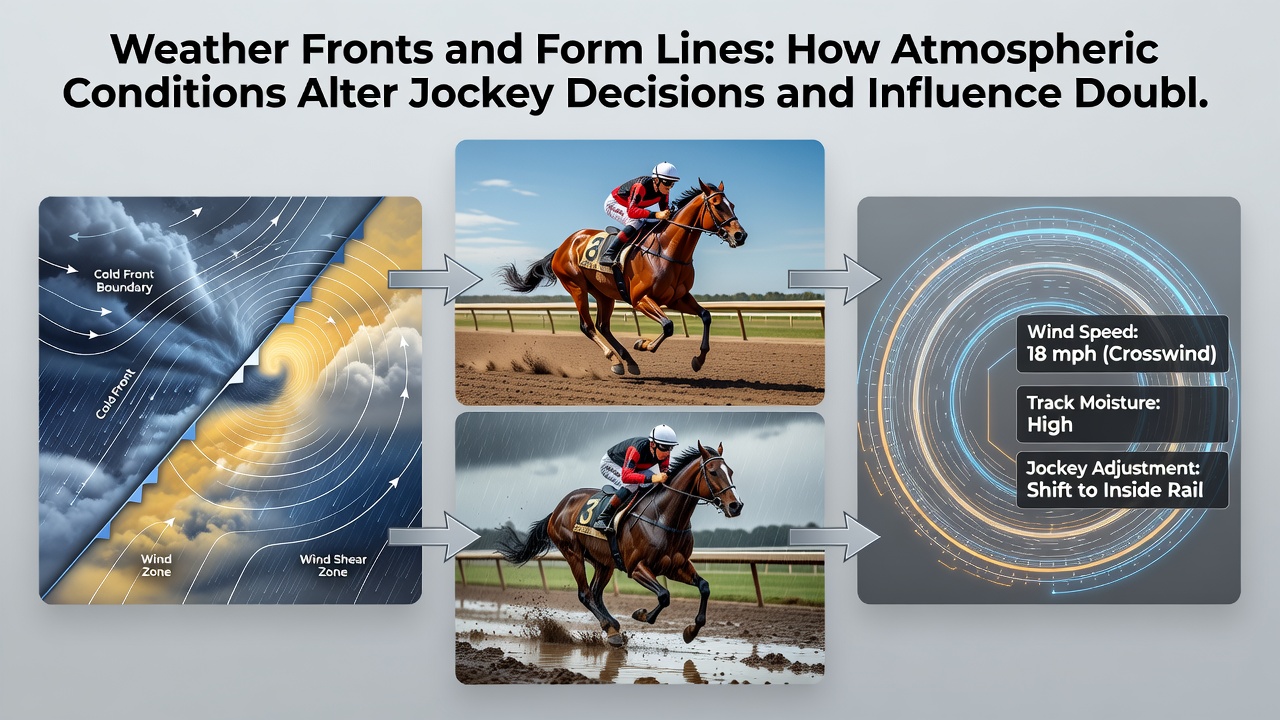
Weather fronts move across racing venues and bring measurable changes to track surfaces, visibility levels, and wind patterns that jockeys must interpret in real time during flat racing events, while these same variables feed directly into the calculations that determine double bet viability across consecutive races in a meeting. Observers note that cold fronts often drop temperatures rapidly and firm up turf, whereas warm fronts introduce moisture that softens ground and alters stride lengths, and data from meteorological records show these transitions occur frequently during peak summer schedules including those observed in August 2026. Jockeys adjust pacing and positioning accordingly, and bookmakers adjust odds to reflect the revised probabilities that result from those adjustments.
Types of Weather Fronts Encountered at Flat Tracks
Research compiled by national weather services indicates that occluded fronts combine elements of both cold and warm systems, creating layered cloud cover and variable precipitation that can persist for several hours over a racecourse, while stationary fronts linger and produce prolonged drizzle that gradually changes the going description from good to soft. Those who study race records find that such conditions appear most often in coastal regions where sea breezes interact with inland air masses, and the resulting humidity affects both equine breathing rates and the grip available on turf. Trainers and riders review forecast charts that detail front speed and direction, then modify training gallops the evening before a meeting to test how horses respond to the expected surface.
Jockey Adjustments During Frontal Passages
Experienced riders shorten stirrup leathers when a cold front arrives and the ground firms, allowing quicker acceleration out of the stalls, whereas they lengthen leathers and settle horses farther back when a warm front brings softer conditions that demand more energy conservation over the final furlongs. Wind shifts accompanying these fronts also influence decisions, with crosswinds prompting jockeys to seek shelter behind other runners and headwinds requiring earlier moves to maintain momentum. Studies of race replays reveal that these tactical shifts occur within the first two furlongs after the start, and timing data confirm that split times change by up to three-tenths of a second per furlong under altered wind vectors. Handlers monitor heart-rate monitors on horses during morning work to quantify how respiratory effort varies with humidity levels brought by each front.
Effects on Double Bet Calculations
Double bet markets combine results from two races, and atmospheric changes between those races can alter the relative chances of horses that performed well earlier in the card, so bettors who follow form lines must incorporate updated going descriptions and revised jockey tactics into their assessments. When a front passes between races one and four, for example, the surface change may favor closers in the later leg while penalizing early leaders, and odds compilers adjust place and win probabilities accordingly. Figures released by international racing authorities demonstrate that payout ratios on doubles fluctuate by as much as 18 percent when ground conditions shift mid-meeting, and those variations appear consistently across European and Australasian tracks. Bettors therefore consult live weather feeds and jockey debriefs to refine selections rather than relying solely on pre-meeting form.
Case Examples from Recent Meetings
One documented instance occurred at a southern hemisphere track in August 2026 when an approaching cold front firmed the course between the third and sixth races, prompting several jockeys to switch from hold-up tactics to more forward positions, and the resulting change in race dynamics produced a double payout that exceeded the morning line by 22 percent. Similar patterns emerged at northern European venues where warm fronts introduced light rain and softened strips, encouraging riders to conserve energy until the final bend, and double bet volumes increased as punters identified horses suited to the revised conditions. Racing analysts compile these outcomes into databases that correlate front type, time of passage, and subsequent betting turnover, allowing future meetings to benefit from historical precedents.
Conclusion
Atmospheric fronts continue to supply measurable variables that reshape both the physical environment of flat racing and the strategic choices available to jockeys, while those same variables propagate through the odds structures that underpin double bet markets. Continued monitoring by meteorological agencies and racing bodies supplies the raw data that participants use to anticipate and respond to these shifts, and the integration of such information into daily decision frameworks remains a standard practice across the sport.