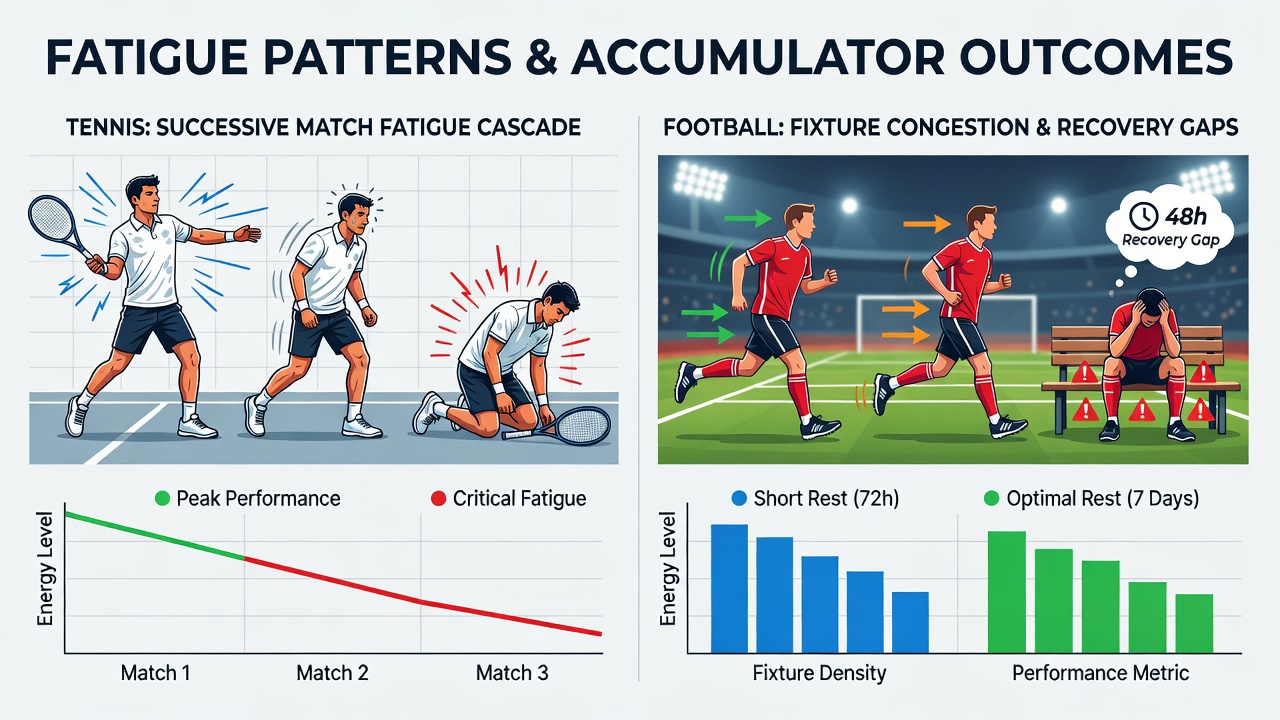
How Successive Match Fatigue Shapes Accumulator Winnings in Tennis and Football
Successive matches create measurable drops in performance metrics across both tennis tours and football leagues, and these changes directly affect how accumulators resolve when bettors combine selections from multiple fixtures. Researchers tracking heart rate variability and muscle recovery times have documented consistent declines after three or more consecutive days of competition, while data from major tournaments shows win percentages falling by 12 to 18 percent in later rounds for players who competed the previous day. Observers note that these patterns appear most clearly in best-of-three tennis sets and in football matches scheduled 48 to 72 hours apart, where sprint distances decrease and error rates on serve or passing accuracy rise.
Tracking Fatigue Indicators in Tennis Schedules
Tennis calendars pack events tightly during the European swing each spring and early summer, so players often move from one tournament directly into the next without full recovery windows. Studies published by the University of Queensland's sports science unit tracked elite competitors through clay-court and grass-court sequences in 2025 and found that reaction times slowed measurably after the second match in a row, with serve speeds dropping an average of 4.2 kilometers per hour by the third outing. Those who've analyzed match logs point out that players who reached quarterfinals or later in week-one events showed higher rates of unforced errors when they opened the following week's draw, and these shifts influence accumulator legs built around individual game totals or set handicaps.
June 2026 brings the usual cluster of ATP and WTA events on grass leading into the Wimbledon fortnight, where the quick turnaround between tournaments amplifies recovery demands. Data collected across similar periods reveals that first-round matches in the second week of the grass season produce more retirements and longer match durations when one player arrives with limited rest, altering the outcomes that accumulator builders rely on when stacking early-round selections.
Football Fixture Congestion and Performance Drops
Football leagues and cup competitions frequently schedule teams for midweek and weekend games within the same seven-day window, and fatigue effects surface in reduced high-intensity running and defensive positioning errors. League-wide statistics compiled by European football federations indicate that clubs playing three matches in eight days concede 23 percent more shots from outside the box in the third fixture, while clean-sheet rates fall from 38 percent to 29 percent. These measurable changes matter for accumulators that combine over/under totals or both-teams-to-score selections across several teams in a congested schedule.
Coaches adjust lineups during such stretches by rotating squad players, yet the overall workload still registers in GPS-tracked metrics. One analysis of domestic league data from the 2024-2025 season showed that teams with fewer than four days between matches won 9 percent fewer points on average than those with standard rest, and the pattern repeated across multiple competitions. Bettors constructing accumulators around defensive solidity therefore encounter different probabilities once fixture lists tighten.
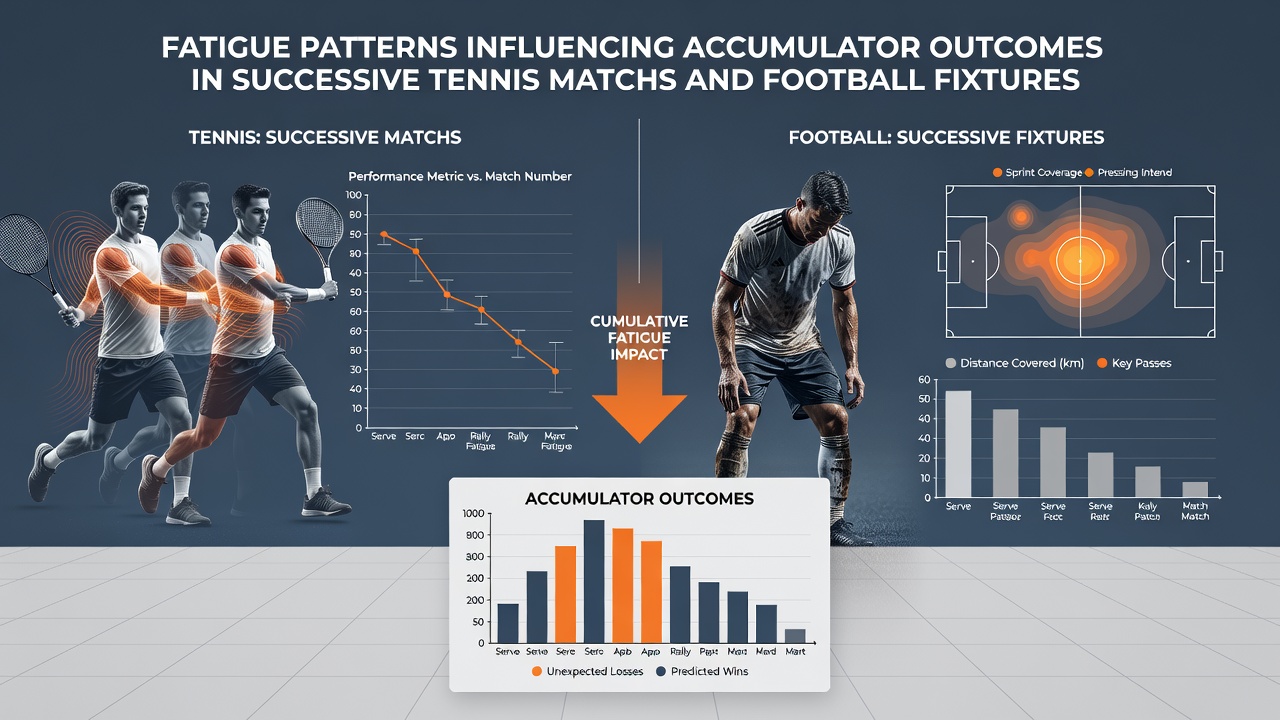
Combined Effects on Multi-Leg Bets
When accumulators link tennis and football selections across the same calendar week, the overlapping fatigue windows compound the uncertainty. Match data from June periods shows that both sports experience elevated variance in scoring margins once players or squads exceed typical match loads, and this variance widens the gap between expected and actual results in chained bets. Industry reports from the Australian Institute of Sport highlight how neuromuscular fatigue markers remain elevated for up to five days after repeated high-effort performances, meaning selections placed on day-four or day-five fixtures carry different risk profiles than those placed on fresh legs.
Statistical models built from historical betting outcomes indicate that accumulator payout rates adjust downward when legs involve teams or players appearing in their third or fourth contest within a short span. Those tracking these trends emphasize that the effect appears across both pre-match and live markets, because in-game adjustments by coaches or players cannot fully offset accumulated physical demands.
Monitoring Recovery Data for Better Context
Teams and players now publish or share selected recovery metrics through official channels, allowing closer observation of workload management. FIFA's medical assessment protocols and similar frameworks used by national tennis associations provide standardized benchmarks for muscle soreness and sleep quality that correlate with subsequent performance. When these indicators trend outside normal ranges, historical results show increased likelihood of unexpected draws in football or extended sets in tennis, both of which shift accumulator probabilities.
June 2026 schedules already list several overlapping international breaks and club tournaments, creating natural test cases for these fatigue patterns. Analysts compiling season-long datasets continue to refine the thresholds at which performance declines become statistically significant, giving those who review accumulator construction access to clearer inputs.
Conclusion
Fatigue patterns documented across successive tennis matches and football fixtures produce measurable shifts in key performance indicators that directly influence accumulator resolution rates. Data collected from governing bodies and academic sports-science groups demonstrates consistent declines in speed, accuracy, and defensive output once recovery intervals shorten, and these changes appear most reliably during dense June schedules. Observers who incorporate workload metrics into their review processes therefore operate with additional context when evaluating multi-leg selections that span multiple days of competition.