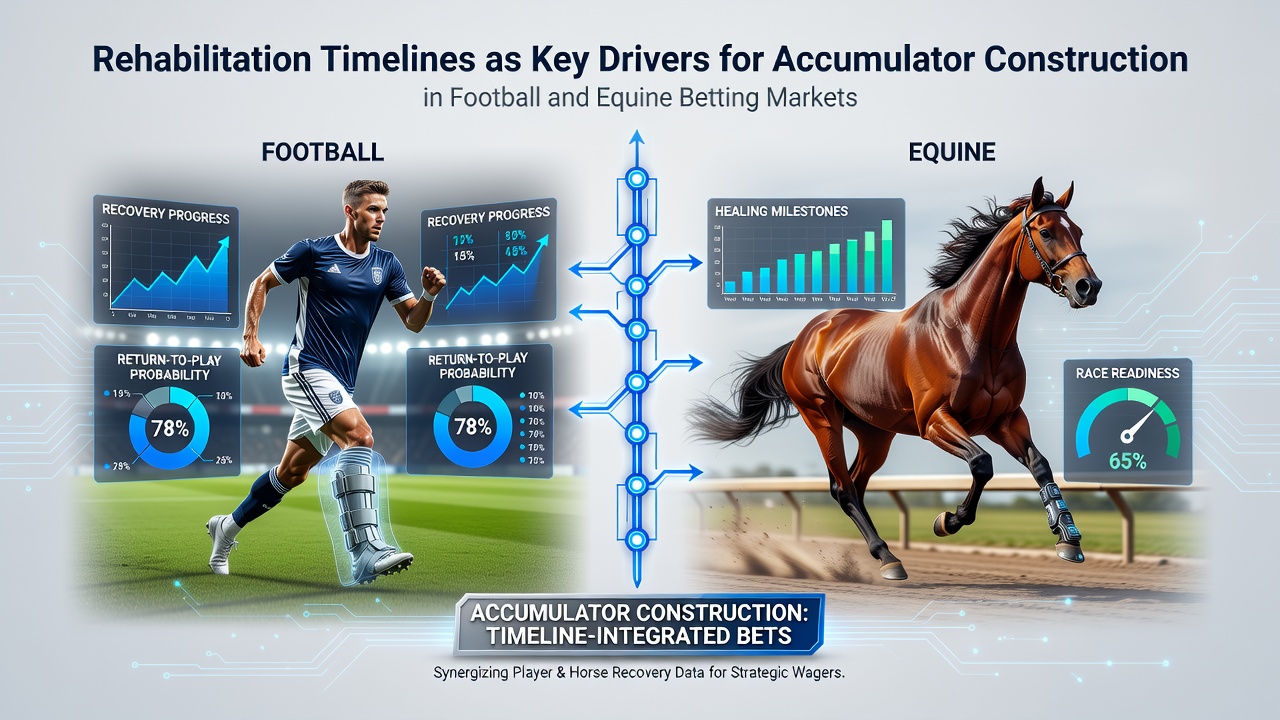
Recovery Schedules Shaping Accumulator Strategies Across Football and Equine Markets
Rehabilitation timelines play a central role in how bettors construct accumulators in football and horse racing markets because these schedules directly affect team lineups and equine fitness levels at specific events. Data from sports performance tracking shows that a key player's projected return from injury often shifts odds and forces adjustments in multi-leg bets where each selection must succeed for the accumulator to pay out. In July 2026 several European football leagues prepare for pre-season fixtures while major racing festivals approach, and analysts track recovery data to identify patterns that influence accumulator construction across both sports.
Football Player Recoveries and Accumulator Construction
Football clubs publish detailed medical updates on player injuries and these reports feed directly into betting market movements as operators adjust prices based on expected availability. Studies from the Union of European Football Associations reveal that anterior cruciate ligament recoveries typically span nine to twelve months while hamstring strains average three to six weeks depending on severity and individual physiology. Bettors monitoring these timelines often build accumulators around teams expected to field full-strength squads after key returns and they combine those selections with underdog lines where an opponent's star performer remains sidelined. One analysis of Premier League matches in the 2025-2026 season found that sides returning from international breaks with multiple recovered players posted win rates five percentage points above season averages when facing opponents still managing injury lists.
Live betting platforms further amplify these effects because in-game data streams update accumulator options in real time as match situations evolve and fitness concerns surface during warm-ups. Observers note that a last-minute confirmation of a central midfielder's fitness can trigger rapid shifts in both pre-match and in-play accumulator markets and this volatility creates opportunities for those who follow rehabilitation reports closely. Researchers at the Australian Institute of Sport have documented similar patterns in other football leagues where recovery data correlates with changes in goal-scoring rates and clean-sheet probabilities that directly feed accumulator calculations.
Equine Rehabilitation Timelines in Racing Markets
Horse racing presents parallel dynamics because thoroughbreds require structured recovery periods after races or veterinary interventions and these intervals determine eligibility for upcoming events. Figures from Racing Australia indicate that typical rest periods after a tendon injury range from four to eight months while minor muscle strains often resolve in three to five weeks when managed with controlled exercise programs. Accumulator builders in equine markets frequently select horses whose recent form lines align with completed rehabilitation cycles and they layer these choices with other legs involving jockey bookings or track conditions that favor recovered runners. Data compiled by the Jockey Club in the United States shows that horses returning from layoffs of sixty to ninety days achieve strike rates within two percentage points of their career averages when entered in suitable race classes.
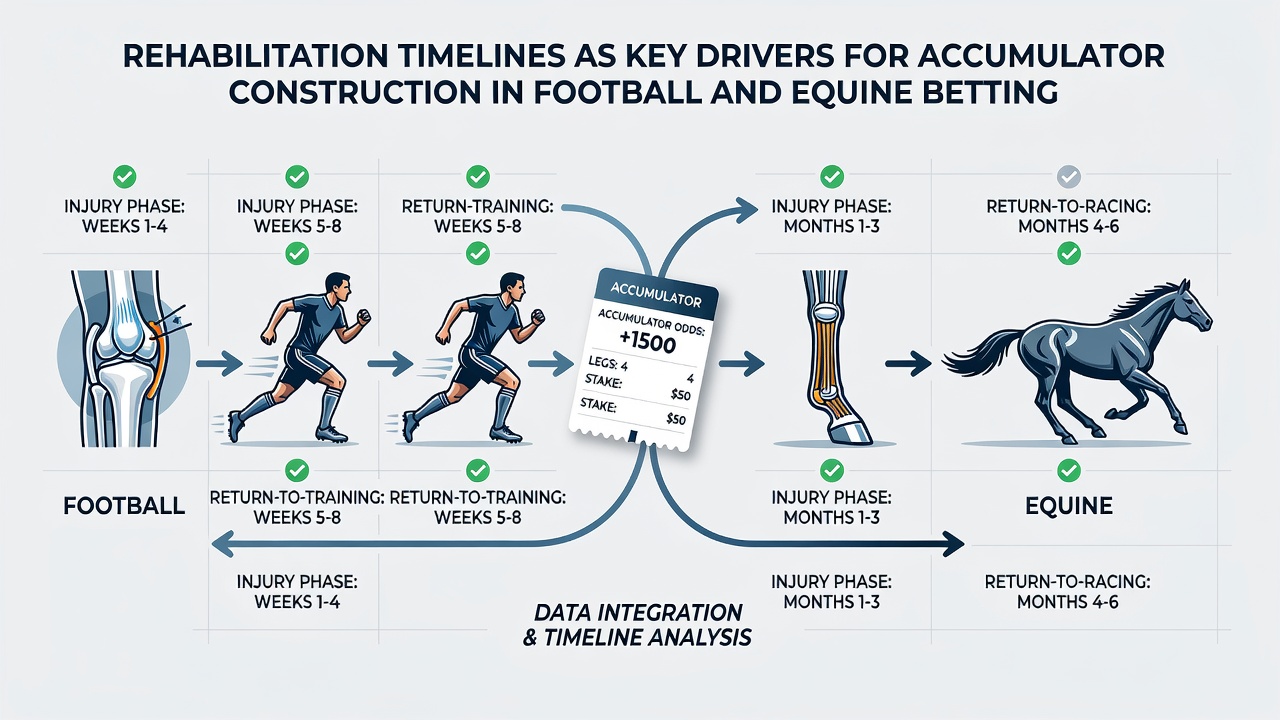
Trainers release veterinary bulletins and these announcements move tote pools and fixed-odds boards in ways that reward careful timeline tracking. People who follow equine medical reports often notice that a horse cleared for its first start after a confirmed recovery tends to attract support in accumulator pools while rivals still building fitness attract longer prices that can balance risk across the bet. European racing authorities track similar statistics and their reports confirm that recovery duration correlates with subsequent performance metrics such as sectional times and finishing positions that accumulator models incorporate.
Combined Market Effects and Data Integration
Operators in both football and equine sectors integrate rehabilitation databases into pricing algorithms and these systems generate accumulator specials that reflect current fitness landscapes. A report issued by the European Gaming and Betting Association highlights how cross-sport platforms allow users to combine football team selections with horse racing legs within single accumulator tickets and recovery timelines serve as the common thread that links the two markets. In July 2026 major summer racing meetings coincide with international football tournaments and this overlap increases the volume of hybrid accumulators where bettors weigh player and equine recovery data simultaneously. Research published by the University of Sydney Centre for Veterinary Education demonstrates that equine rehabilitation outcomes improve when trainers follow evidence-based protocols and these improved outcomes translate into more predictable performance data that accumulator constructors can use.
Market liquidity also responds to these timelines because high-profile returns generate increased betting interest and this surge affects odds across related selections. Those who study historical patterns observe that accumulators built around verified recovery milestones tend to exhibit different payout distributions compared with selections based solely on recent form and this distinction appears consistently across multiple jurisdictions. Government statistical agencies in Canada and New Zealand publish periodic reviews of sports betting activity that show correlations between injury reporting cycles and changes in multi-leg bet volumes though the precise mechanisms vary by sport and regulatory environment.
Conclusion
Rehabilitation timelines function as measurable inputs that shape accumulator construction in football and equine betting markets through their influence on availability and performance expectations. Tracking these schedules provides structured data points that operators and bettors alike incorporate into pricing and selection processes and the patterns hold across different leagues and racing jurisdictions. Continued publication of medical and veterinary reports sustains this informational flow and supports ongoing refinement of accumulator strategies that account for recovery cycles in both sports.