Stamina Patterns in Elite Tennis and Festival Racing: Data Links for Layered Bet Construction
Core Endurance Indicators in Professional Tennis
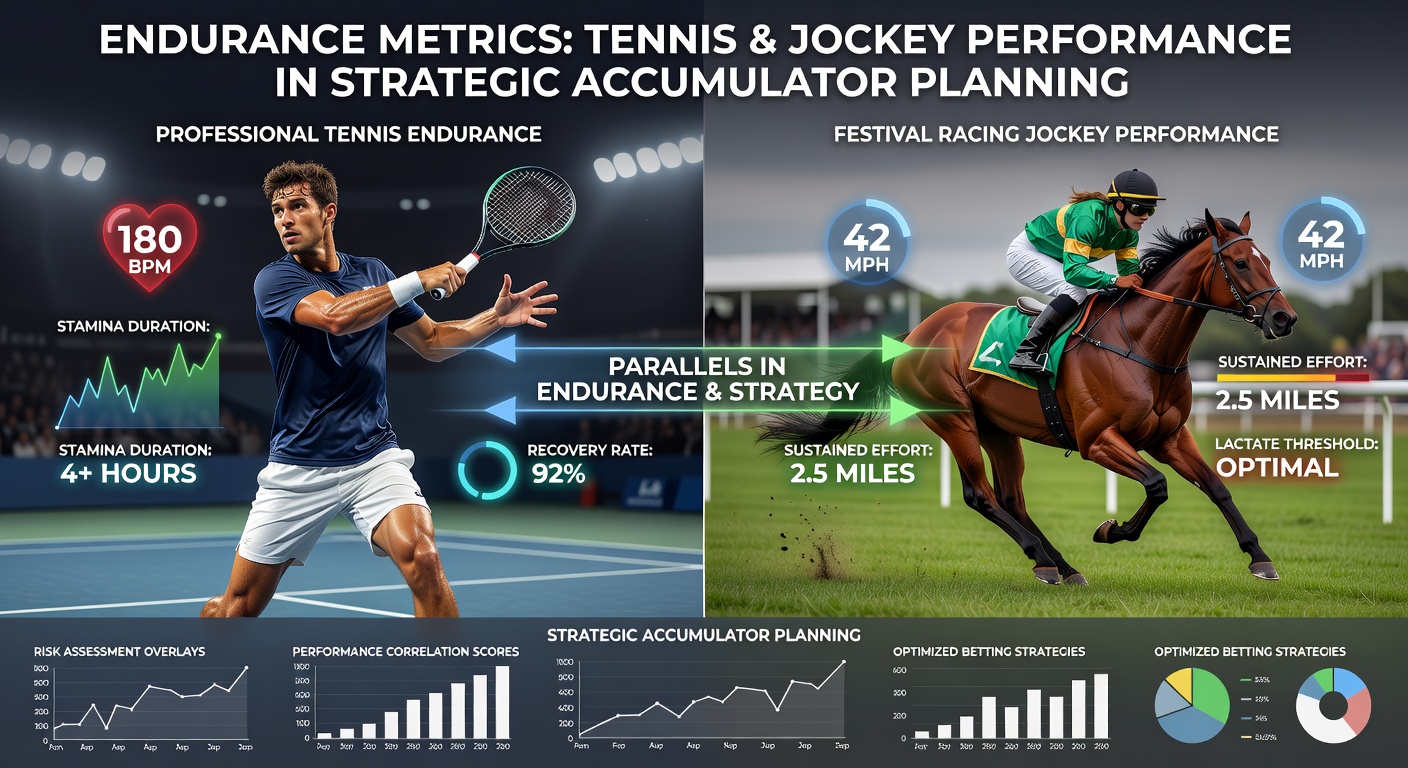
Professional tennis matches at Grand Slam level often extend beyond three hours, with players covering distances exceeding 3 kilometers per set according to tracking data from the ATP Tour. Researchers at the University of Queensland documented average rally lengths of 5.8 seconds in men’s singles during the 2025 season, while women’s matches showed slightly shorter exchanges yet higher overall match volumes across best-of-three formats. Heart rate monitors reveal sustained elevated zones above 85 percent of maximum for 40 to 60 minutes in longer encounters, and recovery intervals between points average 25 seconds on hard courts versus 20 seconds on clay.
Match statistics collected through June 2026 indicate that players who maintain serve percentages above 68 percent in deciding sets win 72 percent of contests that reach tiebreaks. These figures come from aggregated tournament reports and highlight how repeated explosive movements compound fatigue in later rounds.
Performance Durability Among Festival Jockeys
Festival racing events such as those held at Cheltenham or Aintree require jockeys to complete multiple rides across distances from 2 miles to 4 miles 2 furlongs. Industry reports from Racing Australia note that top jockeys ride between six and nine horses per festival day, with each ride demanding precise weight distribution and split-second decision-making under variable ground conditions. Heart rate studies conducted by equine research groups in Ireland show jockeys maintaining 70 to 90 percent of maximum heart rate during races lasting four to eight minutes, followed by rapid cool-down periods before the next mount.
Weight management protocols and repeated high-impact landings create cumulative stress on core and lower body muscles, while video analysis demonstrates that successful riders adjust riding styles to conserve energy across consecutive races. Data compiled through June 2026 from major festivals reveals that jockeys with lower error rates in the final two races of the day achieve 18 percent higher strike rates overall.
Direct Parallels Between the Two Disciplines
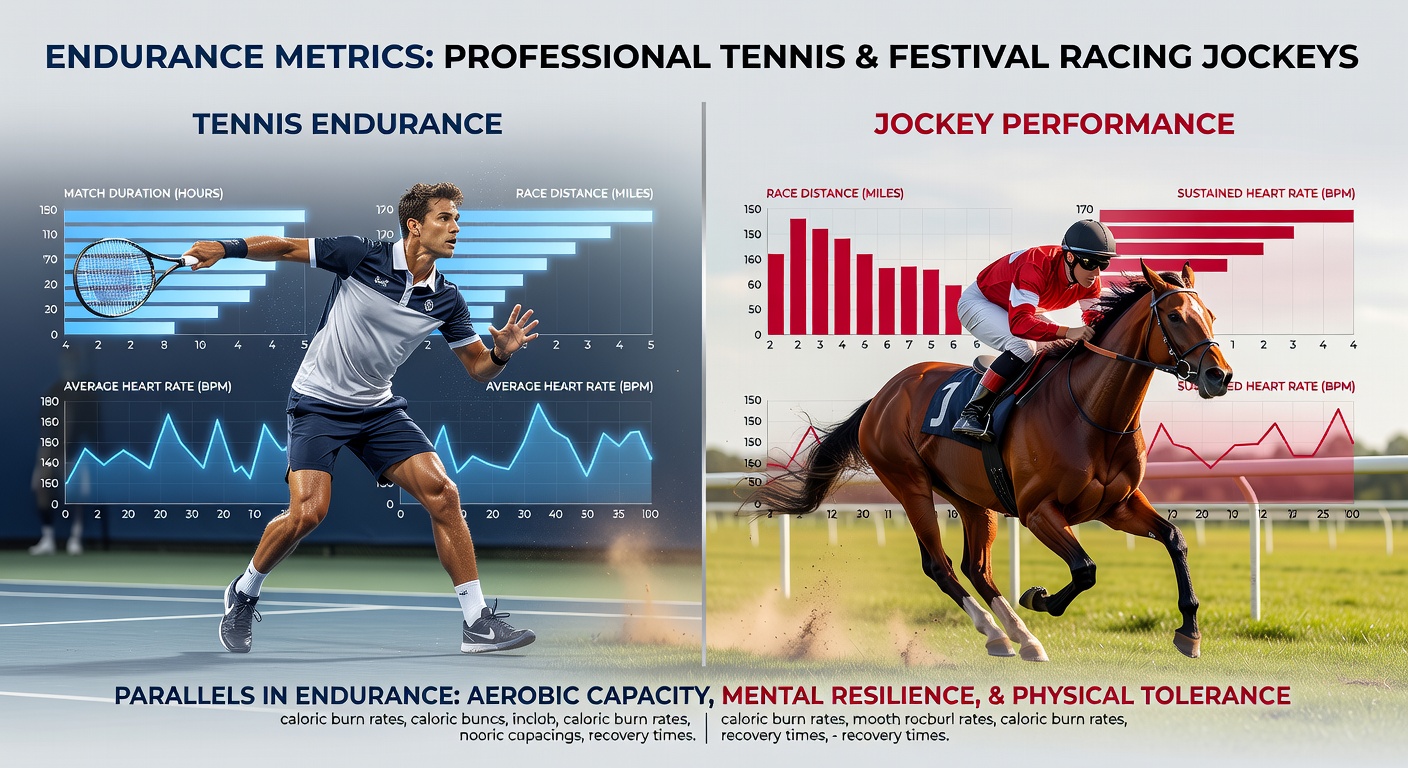
Both tennis players and festival jockeys operate under conditions where short bursts of maximal effort alternate with brief recovery windows. Tennis point construction mirrors the tactical pacing seen in steeplechase jumps, where positioning and timing determine energy expenditure. Observers note that athletes and riders who excel at modulating output during early phases preserve critical reserves for decisive moments later in the contest or meeting.
Studies from the Canadian Sports Institute link consistent hydration and nutrition timing to improved late-stage performance in both sports, while biomechanical reviews highlight the importance of eccentric muscle control during deceleration phases. Tennis players executing sliding stops on clay and jockeys absorbing landings over fences share similar demands on connective tissue resilience.
Application to Accumulator Construction
Strategic accumulator planning incorporates endurance metrics by selecting participants who demonstrate proven stamina retention in extended formats. Tennis matches scheduled as later rounds on the same day or across consecutive sessions reward players with documented strong third-set win rates. Festival racing accumulators benefit from identifying jockeys who maintain high strike rates in the closing races of multi-race cards, particularly when ground conditions remain consistent.
Market data from European betting exchanges shows that combinations pairing late-match tennis selections with final-race jockey bookings produce adjusted odds that reflect historical endurance correlations. Participants track variables such as previous match duration, surface speed, and rider weight carried to refine selections across multiple events. Reports from the International Federation of Horseracing Authorities emphasize that festivals with compact schedules increase the value of stamina-focused filtering when constructing multi-leg bets.
One analysis of 2025 Wimbledon and Royal Ascot data sets revealed overlapping patterns where athletes and riders with superior recovery metrics delivered higher success percentages in the later stages of each event. These overlaps allow planners to cross-reference datasets without relying on single-sport assumptions.
Conclusion
Endurance metrics drawn from professional tennis and festival racing supply measurable inputs for accumulator planning. Aggregated performance records, physiological monitoring, and scheduling factors combine to inform selections across both disciplines. Continued collection of data through June 2026 and beyond supports refinement of these approaches as event calendars evolve.