
The Influence of Playing Surfaces on Selections Across Athletic Disciplines
Athletes and coaches face surface-specific demands that directly shape team lineups, individual event entries, and strategic priorities throughout each season. Different playing fields alter ball speed, player movement, and injury probabilities, which in turn guide decisions about who competes where and when. Research compiled by sports science groups shows that surface characteristics such as friction, hardness, and maintenance levels produce measurable performance gaps across tennis, football, athletics, and related disciplines.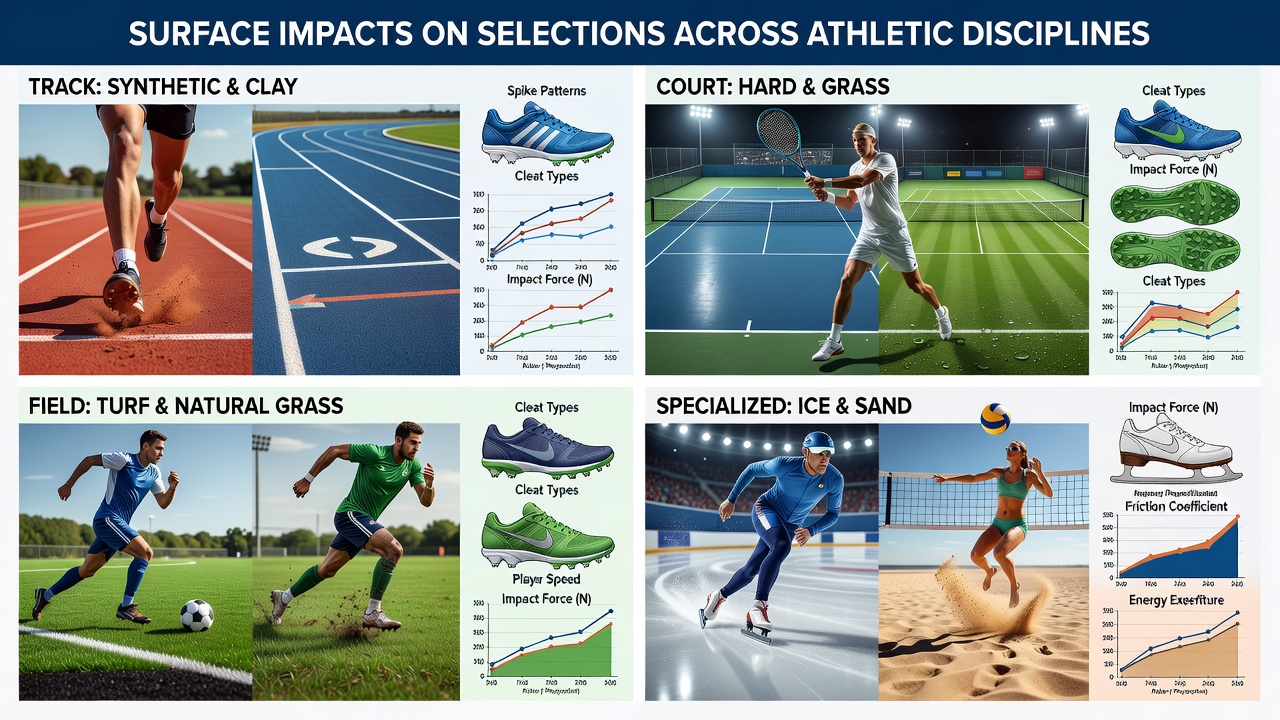
Athletes and coaches face surface-specific demands that directly shape team lineups, individual event entries, and strategic priorities throughout each season. Different playing fields alter ball speed, player movement, and injury probabilities, which in turn guide decisions about who competes where and when. Research compiled by sports science groups shows that surface characteristics such as friction, hardness, and maintenance levels produce measurable performance gaps across tennis, football, athletics, and related disciplines.Tennis Court Types Drive Player Lineup Decisions
Clay, grass, and hard courts each create distinct conditions that tournament organizers and national federations weigh when confirming entries and seeding lists. Clay slows the ball and produces higher bounces, rewarding players who excel in extended rallies and defensive positioning, while grass favors those with strong serve-and-volley techniques because the surface speeds up shots and keeps bounces low. Hard courts sit between these extremes yet still vary by manufacturer and weather exposure, leading selection panels to review historical win rates on each material before finalizing rosters for upcoming events. Data collected by the International Tennis Federation indicates that players with clay-court specialists often receive priority for European spring tournaments, whereas serve-dominant athletes appear more frequently on the Wimbledon draw sheets. Those patterns extend into doubles selections, where pairings combine one baseline specialist with one net player to balance surface effects. Observers note that coaching staffs review surface-adjusted statistics weeks in advance to avoid mismatches that could affect overall team standings.Football Pitch Variations Affect Squad Rotations
Natural grass, hybrid turf, and artificial surfaces each influence substitution patterns and starting eleven choices in professional leagues. Artificial pitches increase traction and reduce sliding distances, which can elevate muscle strain risks for players accustomed to natural grass, prompting managers to rest certain athletes or alter formation styles. FIFA technical reports document that teams traveling between venues with differing pitch types adjust training schedules and select more physically robust midfielders for artificial surfaces to maintain pressing intensity without elevated fatigue. Hybrid pitches, which combine natural grass with synthetic fibers, appear in many elite stadiums because they balance durability with playability; however, maintenance levels still fluctuate and affect ball roll consistency. League data from European competitions reveal that clubs with deeper squads rotate defenders more aggressively on hybrid surfaces during congested fixture periods, preserving key players for matches on older natural grass grounds that demand greater stamina over ninety minutes.