
Unlocking Patterns in MMA: Historical Data as a Tool for Informed Wagering
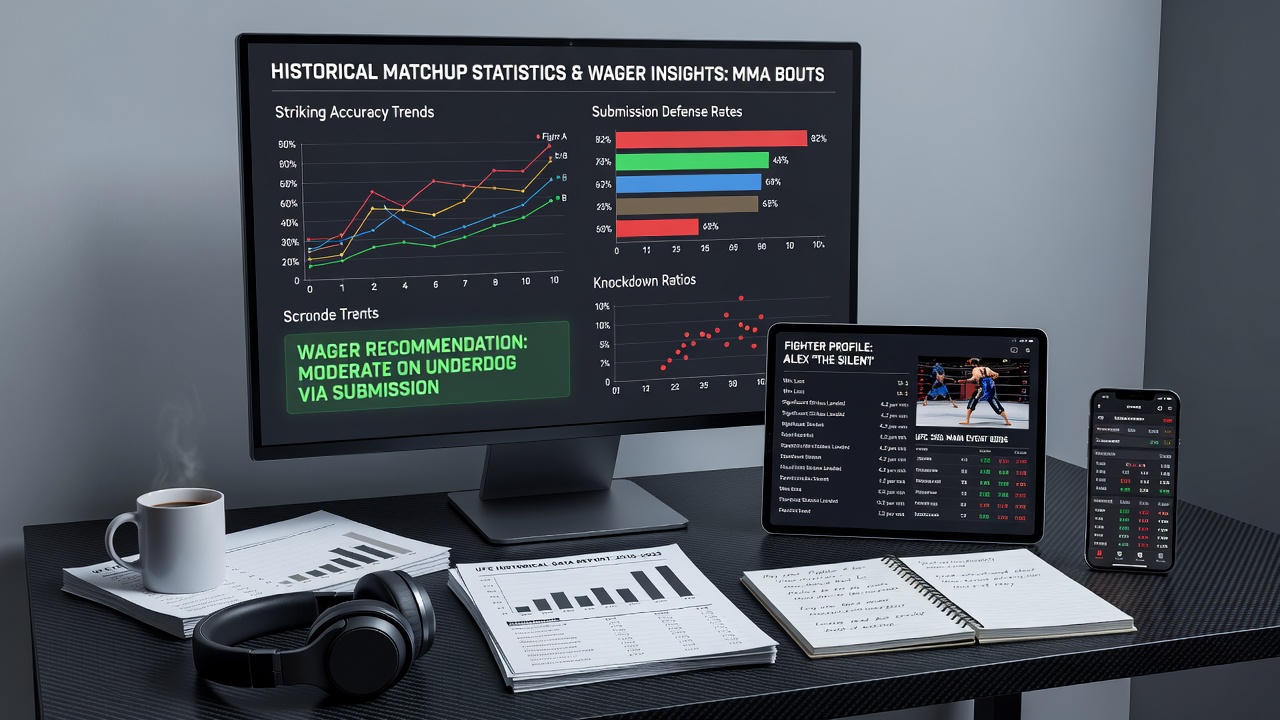
Historical matchup statistics provide structured information that bettors examine when evaluating mixed martial arts contests, and these records encompass win-loss ratios against comparable opponents along with metrics such as takedown defense percentages and significant strike accuracy in prior fights. Data from organizations tracking combat sports shows that fighters who maintain consistent performance against similar body types and fighting styles often carry those trends forward, while abrupt changes in training camps or weight classes can alter expected outcomes. Observers note that compiling these figures requires cross-referencing multiple bouts rather than isolated results because single-fight anomalies rarely predict long-term patterns.
Core Metrics That Shape Analysis
Key indicators include submission attempt rates per fifteen minutes, average fight time before stoppages, and head strike absorption when facing southpaw versus orthodox stances. Researchers at institutions monitoring combat athletics have compiled datasets revealing that grapplers with above-average control time in the first round tend to replicate that advantage when matched against strikers who lack extensive wrestling backgrounds. Those who study fight footage alongside numerical logs often identify recurring vulnerabilities such as repeated low-kick absorption that weakens later rounds. Analysts cross-check these elements against recent activity levels because prolonged layoffs frequently coincide with diminished output in subsequent appearances.
Integrating Opponent-Specific Histories
Effective application involves matching a fighter's record against opponents who share physical and stylistic traits with the upcoming adversary, and this process accounts for variables like reach differentials and age gaps at the time of each contest. Figures from major promotions indicate that fighters who improved their takedown accuracy by more than fifteen percent after facing elite wrestlers demonstrate measurable adaptation that carries into future matchups. Bettors review sequences of fights where one participant faced multiple opponents employing the same primary weapon, whether that weapon is leg kicks or guillotine attempts, to gauge defensive evolution. Such layered reviews help isolate whether early-career success stemmed from favorable matchmaking or genuine technical superiority.
Performance against ranked competition receives particular attention because unranked bouts sometimes feature shorter preparation periods and different tactical approaches. Records from events spanning 2024 through mid-2026 illustrate that several middleweight contenders posted higher significant strike differentials when returning from injury compared with their pre-injury baselines, highlighting the value of contextual filters when interpreting raw numbers.
Data Sources and Collection Practices
Publicly available repositories maintained by athletic commissions and independent statisticians supply the foundational numbers, while video archives allow verification of event-specific conditions such as cage size or altitude effects on cardiovascular output. A report issued by the Nevada Gaming Control Board in 2025 documented increased interest in granular combat sports analytics among regulated operators, noting that detailed historical filters appear in many internal risk models. Those compiling custom spreadsheets frequently incorporate round-by-round breakdowns rather than aggregate fight totals because momentum shifts within individual rounds can reveal fatigue thresholds that overall statistics obscure. Cross-border data harmonization efforts among North American and European regulators have begun standardizing certain categories, which simplifies comparison across promotions.
Limitations That Require Acknowledgment
Sample sizes remain modest in many weight classes, particularly at the extremes of the divisions, and this scarcity reduces the reliability of percentage-based projections when fighters have competed fewer than eight professional bouts. Rule variations between promotions, including differences in glove size and permitted strikes, introduce additional variables that historical domestic records may not fully capture. Experts tracking July 2026 events have observed that international fighters transitioning to new regulatory environments sometimes exhibit temporary adjustments in pacing that deviate from established patterns until acclimation occurs. Environmental factors such as travel across time zones and hydration protocols also influence output yet appear inconsistently in public datasets.
Practical Application in Upcoming Cards
Preparation for events scheduled later in 2026 typically begins with filtering recent opponents by height, weight, and preferred finishing method, then weighting those results according to the elapsed time since each bout. Multiple sources, including academic papers on sports performance modeling from Canadian universities, suggest that combining quantitative metrics with qualitative notes on training camp changes produces more stable expectations than either approach in isolation. Bettors who maintain updated databases often flag instances where both participants share similar historical success rates against a common archetype, which narrows the margin for predictive advantage and prompts further scrutiny of secondary indicators such as clinch work volume.
Conclusion
Historical matchup statistics supply one component within broader evaluation frameworks for mixed martial arts wagers, and their utility increases when integrated with current form indicators and situational context. Regulatory bodies across several jurisdictions continue to monitor how such analytical tools influence betting markets, yet the underlying data remains accessible to anyone willing to compile and verify records systematically. Continued refinement of collection methods, particularly through standardized reporting requirements, should enhance the precision of these resources over successive fight cycles.