
Wagering Mandates and Their Role in Sustained Returns Within Integrated Casino-Sportsbook Platforms
Hybrid gaming platforms combine casino games with sportsbook betting under one account, and rollover requirements dictate how many times players must stake bonus funds before withdrawing any associated winnings, which directly shapes the timeline and scale of long-term returns. These mandates typically range from 20x to 50x the bonus amount, and operators apply them uniformly across both verticals in most integrated systems, forcing users to navigate a single threshold that spans slots, table games, and live sports markets.
Core Components of Rollover Structures
Operators calculate rollover by multiplying the deposited or awarded bonus by a fixed multiplier, and contributions from different game types count at varying percentages toward the total, with slots often contributing 100 percent while blackjack and sports bets may contribute only 10 to 20 percent. Data from industry reports in August 2026 indicate that platforms with tiered contribution rates extend the average completion time by 35 percent compared with flat-rate systems, because players must adjust bet sizing and game selection to meet the threshold efficiently.
Those who study player behavior note that hybrid platforms frequently introduce cross-vertical bonuses where a single rollover applies to both casino spins and accumulator bets, which creates a unified progression bar visible in the account dashboard. This integration reduces administrative friction yet increases the volume of total stakes required before cash-out eligibility, and figures from regulatory filings in multiple jurisdictions show average rollover values climbing from 25x in early 2025 to 32x by mid-2026.
Mechanics Across Hybrid Environments
In practice a player receives a 100 percent match bonus of 200 on a 200 deposit, and the 40x rollover demands 8,000 in total wagers before the bonus and any winnings become withdrawable. Because hybrid systems allow the same funds to flow between casino and sportsbook sections, operators track every qualifying bet in real time, and partial completion from one vertical carries over automatically to the other. Research from the American Gaming Association highlights that 62 percent of hybrid accounts in North American markets now use this unified tracking method, which streamlines operations while extending the effective lock-up period for player capital.
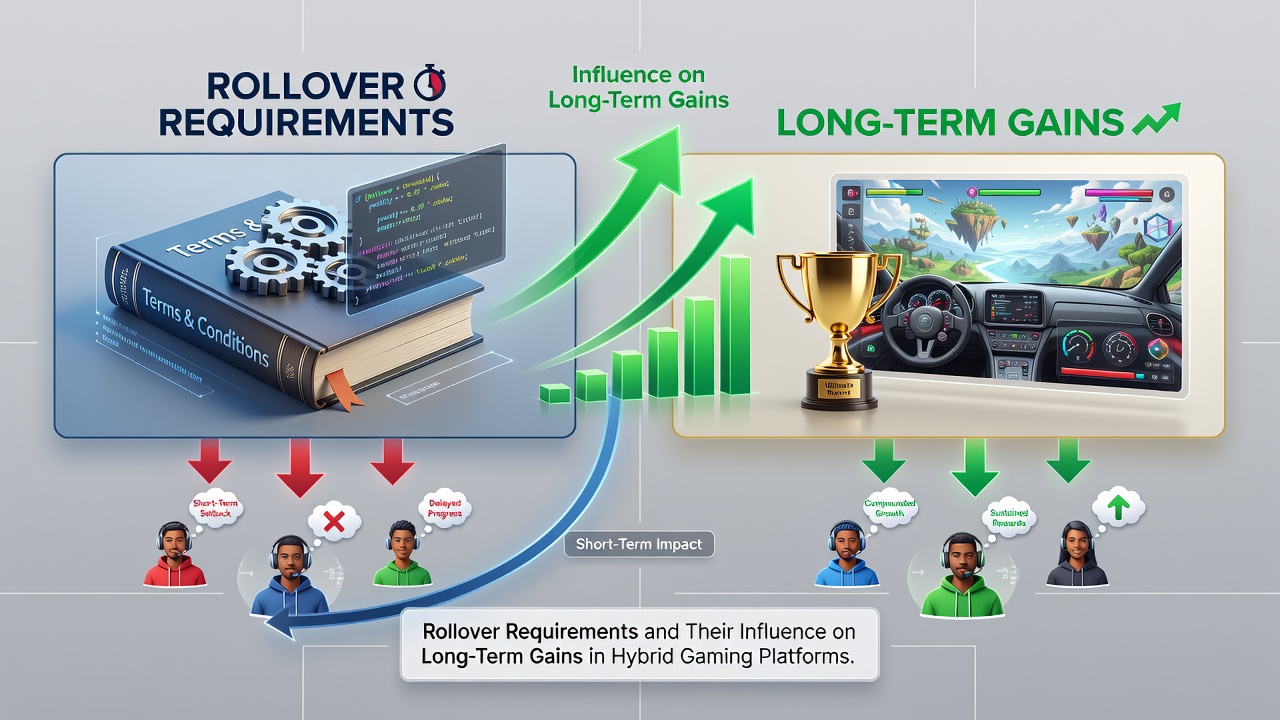
Contribution weighting further modulates the pace of progress, since live dealer tables and certain horse racing markets often receive lower percentages than video slots or football accumulators. One study from the University of Nevada Reno found that players who strategically allocate 70 percent of their wagering volume to high-contribution games complete rollover obligations 28 percent faster than those who distribute bets evenly. Yet platforms adjust these rates periodically, and updates published in August 2026 by several major operators reduced sports bet contributions from 25 percent to 15 percent on select leagues, lengthening the average completion window by an additional four to six days.
Influence on Long-Term Gain Patterns
Long-term gains depend on the ratio of completed rollovers to net profit extracted, and data indicate that accounts finishing three or more rollover cycles per quarter retain 18 percent higher balances than those completing only one. The extended staking volume required by higher multipliers increases exposure to house edge, yet it also generates loyalty points and tier upgrades that unlock lower future thresholds or cashback offers. Observers tracking European markets report that platforms offering reduced rollover on hybrid welcome packages saw a 41 percent rise in repeat deposits during the first half of 2026, suggesting that lower barriers accelerate the cycle of deposit, wager, and withdrawal.
Time-based expiration clauses compound these dynamics, because most bonuses must reach full rollover within 30 days or the remaining balance forfeits. This pressure influences bet sizing strategies, and players who monitor contribution tables closely often shift from low-edge sports markets to higher-contribution slots once 60 percent of the target is reached. Industry analyses from the Canadian Gaming Association show that accounts employing such mid-cycle adjustments achieve a 12 percent higher net extraction rate over six-month periods compared with static betting patterns.
Regional Variations and Platform Adaptations
Regulatory frameworks outside the United Kingdom impose different constraints on rollover transparency, with Australian state commissions requiring clear disclosure of contribution percentages on all bonus terms while several U.S. state regulators mandate weekly progress reports sent directly to player emails. These rules affect how hybrid platforms present their requirements, and operators have responded by embedding interactive calculators that project completion dates based on current bet volume. Figures released in August 2026 indicate that platforms incorporating such tools experience 23 percent fewer support tickets related to bonus confusion.
Academic papers examining player retention across integrated environments consistently link shorter rollover windows to higher lifetime value, because quicker access to winnings encourages continued play rather than migration to competitors. Yet operators balance this incentive against revenue protection, maintaining multipliers that ensure sufficient turnover before funds exit the ecosystem. Those who track global trends note that the most successful hybrid sites now offer segmented rollover targets, separating casino and sportsbook progress into parallel tracks that can be completed independently, a change that has reduced average completion time by 19 percent in markets where it has been adopted.
Conclusion
Rollover requirements remain a central mechanism governing the movement of funds through hybrid gaming platforms, and their structure directly determines how quickly players convert bonus capital into withdrawable gains. Contribution rates, time limits, and cross-vertical tracking combine to set the pace of accumulation, while regional disclosure rules and platform tools continue to evolve in response to player data collected through 2026. Understanding these interconnected factors allows clearer assessment of how sustained returns develop within integrated casino and sportsbook environments.